
Dubai Visa for Moroccan Passport Holders
from the UK
Moroccan Passport holder living in the UK with BRP, eVisa or ILR are not eligible to get on arrival Dubai Visa.
Get Free Expert Advice before applying for Visa
Apply for a Dubai Visa from the UK for Moroccan Passport Holders: Simple, Fast & Stress-Free
Planning your dream Dubai trip from the UK? If you hold a Moroccan passport or you’re in the UK with a UK eVisa (digital immigration status), this page has everything you need to know about getting a Dubai visa quickly and correctly, so you don’t face costly delays or travel stress.
Most importantly, Moroccan passport holders must get a pre-approved Dubai/UAE tourist visa before travelling; you cannot rely on visa-free entry or visa on arrival based only on UK residence status. Even if you have a UK eVisa, your passport nationality determines your UAE visa requirements.
If you’re flying for leisure, a family visit, business, or a quick getaway, we make it fast, simple, and hassle-free to apply online, without embassy queues or confusing official forms.
Who This Visa Is For?
- Moroccan passport holders living in the UK
- UK eVisa holders (e.g., Skilled Worker, Student, Spouse, Dependant – not just British citizens)
- Anyone who must get a Dubai or UAE tourist visa before departure
- Travellers who want fast processing and expert support
We break down the requirements, documents, processing times, and best visa options, and make sure you are fully prepared before you apply.
Start Your Dubai Journey with Confidence with Express Dubai Visa
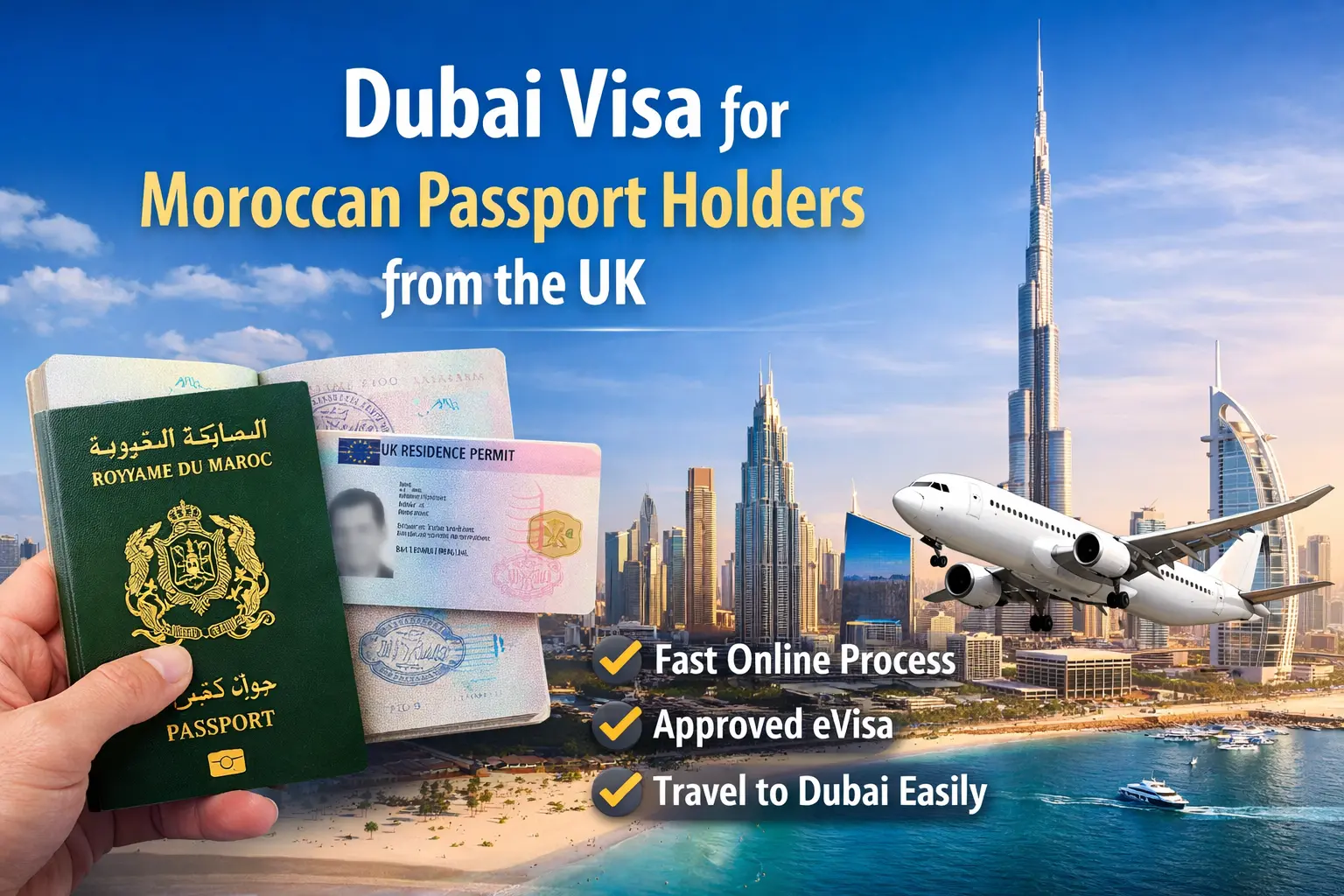

Whats are requirements for Dubai Visa for Moroccan passport holders from the UK?
If you hold a Moroccan passport and live in the UK, the short answer is: Yes, you must obtain a visa before travelling to Dubai.
Moroccan citizens are not eligible for visa-free entry or a visa on arrival in the United Arab Emirates. This applies even if you:
- Live in the UK
- Hold a valid UK residence permit
- Have a UK BRP
- Have a UK eVisa (digital immigration status)
Your passport nationality, not your UK immigration status, determines whether you need a UAE visa.
Why This Confuses Many Travellers?
Many UK residents assume that holding a UK visa or residence status automatically gives them easier access to Dubai. Unfortunately, that’s not how UAE immigration works.
The UAE evaluates entry requirements based on:
- Your passport nationality
- The type of visa you are applying for
- Your travel purpose (tourism, visit, business, etc.)
For Moroccan passport holders, a pre-approved UAE tourist visa is mandatory before departure.
Airlines may deny boarding if you attempt to travel without an approved visa.
What Type of Visa Do You Need?
Most travellers apply for a:
- 14-Day Tourist Visa (Single Entry)
- 30-Day Tourist Visa (Single or Multiple Entry)
- 60-Day Tourist Visa
The right option depends on how long you plan to stay and whether you intend to exit and re-enter the UAE.
We’ll help you choose the correct visa type, as selecting the wrong one can cause delays, extra costs, or a reapplication.
Important Travel Rule
You must have your UAE visa approved before you fly. It is not issued at the airport for Moroccan passport holders.
Applying the first time correctly is critical; even small document errors can lead to delays or rejection.
That’s exactly why many travellers prefer guided support rather than navigating the process alone.
Understanding the Dubai Visa for UK eVisa Holders
If you are living in the UK with a UK eVisa (digital immigration status) and planning to travel to Dubai, here’s the key rule you must understand:
A UK eVisa does NOT automatically grant visa-free entry to the United Arab Emirates.
Your passport nationality determines if you need a Dubai/UAE visa, not your UK residence status.
So, What Does This Mean for Moroccan Passport Holders?
If you hold:
- A Moroccan passport
- A UK Skilled Worker visa (digital status)
- A UK Student visa (eVisa)
- A UK Spouse or Dependant visa (eVisa)
You are still required to obtain a pre-approved UAE tourist visa before travelling.
There is no visa-on-arrival eligibility for Moroccan citizens based solely on holding a UK eVisa.
When Does a UK Residence Help?
While it does not remove the visa requirement, a valid UK residence status can:
- Support your application credibility
- Show legal residency in the UK
- Strengthen your travel history profile
However, it does not replace the need for a UAE tourist visa.
Common Mistakes Travellers Make
Some travellers assume:
“I have a valid UK visa, so I can get a Dubai visa on arrival.”
Unfortunately, airlines and UAE immigration authorities assess eligibility strictly by passport nationality. Arriving without an approved visa can result in denied boarding.
Applying correctly — and early — avoids unnecessary stress and financial loss.
Types of Dubai Visas Available for Moroccan Passport Holders from the UK
If you hold a Moroccan passport and live in the UK, you must apply for a pre-approved UAE tourist visa before travelling to Dubai.
Choosing the right visa type is just as important as applying correctly. The wrong selection can lead to overstays, reapplications, or unnecessary extra costs. Let’s break down your options clearly.
1. 14-Day Dubai Tourist Visa (Single Entry)
Best for: Short holidays, quick family visits, business meetings.
- Valid for short stays (up to 14 days)
- Single entry only
- Ideal for travellers with fixed short travel plans
- Cannot be used for multiple re-entries
This is one of the most common options for UK residents planning a quick Dubai getaway.
2. 30-Day Dubai Tourist Visa (Single or Multiple Entry)
Best for: Standard holidays, extended stays, visiting relatives.
- Stay up to 30 days
- Available as single-entry or multiple-entry
- Suitable for most leisure travellers
If you plan to leave the UAE and re-enter (for example, visiting Oman or another nearby country), the multiple-entry option is important.
3. 60-Day Dubai Tourist Visa
Best for: Long visits, remote working stays, extended family time.
- Stay up to 60 days
- Available in single-entry or multiple-entry format
- Popular for travellers who want flexibility
This option gives more breathing room, especially helpful if you don’t want to worry about cutting your trip short.
4. Multiple-Entry Dubai Visa
Best for: Frequent travellers, regional business trips, GCC travel plans.
- Allows multiple entries within the validity period
- Ideal if you’re travelling in and out of the UAE
If you’re planning regional travel around the Gulf, this can save you from applying again.
5. Transit Visa (Short Stopovers)
If you’re only stopping in Dubai briefly before travelling onward, a transit visa may apply, but eligibility depends on airline and itinerary.
Which Dubai Visa Is Right for You?
The right visa depends on:
- Length of stay
- Travel frequency
- Entry/exit plans
- Flexibility needs
- Travel history
Many rejections and delays happen simply because applicants select the wrong visa type or misunderstand validity vs. stay duration.
That’s where guided support becomes valuable; selecting the correct category from the start reduces risk and speeds up approval.
Dubai Visa Requirements & Eligibility for Moroccan Passport Holders in the UK
If you hold a Moroccan passport and reside in the UK, you must meet specific requirements before travelling to Dubai in the United Arab Emirates.
Applying with complete and accurate documents is essential; even small errors can delay approval.
Here’s exactly what you’ll need.
1. Basic Eligibility Criteria
To apply for a Dubai tourist visa from the UK, you must:
- Hold a valid Moroccan passport
- Have at least 6 months’ passport validity from the date of travel
- Be legally residing in the UK (valid UK immigration status)
- Travel for tourism, family visit, or short business purposes
- Not have an active UAE immigration ban
2. Required Documents for Dubai Visa (From UK)
Valid Moroccan Passport Copy
- Clear colour scan
- Bio-data page
- Minimum 6 months validity
UK Residence Proof
Since you are applying from the UK, you must show proof of lawful residence, such as:
- UK eVisa (digital immigration status)
- Biometric Residence Permit (if applicable)
- Share code or official UKVI status confirmation
Remember: UK residence supports your application — but it does not replace the UAE visa requirement.
3. Passport-Size Photograph
It should be:
- Recent
- White background
- Clear facial visibility
4. Travel Details (Sometimes Required)
Depending on the application route:
- Return flight ticket
- Hotel booking or accommodation details
- UAE host details (if visiting family)
Providing clear travel details can strengthen your application and reduce back-and-forth requests.
Common Reasons for Dubai Visa Delays
Always avoid:
- Blurry passport scans
- Incorrect visa type selection
- Expired or near-expiry passport
- Mismatch between travel dates and visa validity
- Incomplete UK residence proof
Small technical errors can slow everything down, and last-minute travel stress is not fun.
Important Reminder
Moroccan passport holders are not eligible for a visa-on-arrival in Dubai. Your UAE tourist visa must be approved before boarding your flight.
Airlines will verify your visa status before departure.
Step-by-Step: How to Apply for a Dubai Visa from the UK
If you’re a Moroccan passport holder living in the UK, applying for a Dubai visa is a fully online process, but accuracy is everything.
Here’s how the application works:
1. Step 1: Choose the Correct Visa Type
Select the visa based on:
- Length of stay (14, 30, or 60 days)
- Single or multiple entry
- Travel flexibility
Choosing the wrong category can result in rejection or needing to reapply, which means extra time and extra cost.
2. Step 2: Prepare & Upload Your Documents
You’ll need:
- Clear passport copy (6+ months validity)
- UK residence proof (eVisa or BRP status)
- Passport photo
- Travel details (if required)
All documents must be clear, properly formatted, and match your passport information exactly.
3. Step 3: Submit the Application & Pay the Visa Fee
Once documents are uploaded:
- Complete the application form carefully
- Double-check spelling and passport numbers
- Pay the applicable UAE visa fee
Even small typing errors (like name mismatches) can delay approval.
4. Step 4: Processing & Approval
Typical Dubai tourist visa processing time:
- Standard: 2–4 working days
- Urgent processing (if available): Faster turnaround
Processing times may vary depending on volume and document accuracy.
Once approved, your eVisa is sent electronically. You must carry a copy when travelling to Dubai in the United Arab Emirates.
5. Step 5: Travel with an approved visa
Before boarding:
- Airline staff will verify your visa approval
- Ensure passport validity is still compliant
- Carry printed and digital copies of your visa
Remember: Moroccan passport holders cannot obtain a visa upon arrival; approval must be secured before departure.
Dubai Visa Processing Time & Fees for Moroccan Passport Holders from the UK
If you’re applying for a Dubai tourist visa from the UK with a Moroccan passport, understanding processing timelines and costs helps you plan confidently and avoid last-minute stress.
Let’s break it down clearly.
Dubai Visa Processing Time from the UK
For most tourist visas to Dubai in the United Arab Emirates:
Standard Processing
- Typically 2–4 working days
- May vary depending on application volume and document accuracy
Urgent / Express Processing
- Faster turnaround (subject to eligibility and additional fees)
- Ideal for last-minute travel plans
Processing times can increase during:
- UK holiday seasons
- Peak travel periods (Eid, summer, Christmas, New Year)
- Incomplete or incorrect applications
Submitting accurate documents for the first time significantly reduces delays.
Dubai Visa Fees for Moroccan Passport Holders
Dubai visa fees depend on:
- Visa duration (14, 30, 60 days)
- Single or multiple entry
- Standard vs urgent processing
- Service provider charges
Fees generally include:
- UAE immigration visa fee
- Processing charge
- Service handling fee (if applying through an agency)
Because pricing structures can change, it’s important to confirm current rates before applying.
Important Cost Considerations
Keep in mind:
- Visa fees are usually non-refundable once processed
- Rejections may require a fresh application and new payment
- Incorrect visa selection can result in extra costs
- Overstaying a UAE visa leads to fines
Applying it correctly for the first time protects both your travel plans and your wallet.
Why Timing Matters
If your travel date is close:
- Apply at least 7–10 days before departure
- Avoid applying too early if your passport renewal is pending
- Ensure passport validity exceeds 6 months
Many travellers underestimate how quickly small mistakes can delay approval.
Getting guidance early ensures you travel relaxed, not refreshing your inbox at midnight.
Get Your Dubai Visa Fast with Express Dubai Visa
Skip the stress, avoid mistakes, and secure your Dubai tourist visa from the UK quickly. We handle:
- Moroccan passport holders & UK eVisa residents
- Correct visa type selection
- Document review & submission
- Fast, reliable processing
Apply now and travel to Dubai with confidence; your approved eVisa in hand, hassle-free.
[Start Your Application Today]
What is cost of Dubai Visa for Moroccan Passport from the UK?
Visa costs vary by type and duration. Contact us directly for a personalized quote and expert assistance with your application.
Get Your Quote Today
1. Do Moroccan passport holders living in the UK need a Dubai visa?
Yes, Moroccan passport holders residing in the UK must obtain a Dubai/UAE tourist visa before travel. UAE authorities do not offer visa-free entry or a visa‑on‑arrival based solely on UK residence status, and airlines will check visa approval before boarding.
2. Can I travel to Dubai with a UK eVisa if I have a Moroccan passport?
No, a UK eVisa (digital UK immigration status) does not automatically grant you visa-free entry to Dubai. Your passport nationality determines your UAE visa eligibility, so Moroccan nationals must secure a pre-approved Dubai tourist visa before departure, even if they legally reside in the UK.
3. What documents do I need to apply for a Dubai visa from the UK?
To apply for a Dubai/UAE tourist visa from the UK, you generally need:
- A valid Moroccan passport (minimum 6‑months’ validity)
- A passport-style photo (white background)
- Proof of UK residence (eVisa or other valid status)
- Optional: travel itinerary (flight/hotel bookings)
Recent updates also require a copy of the passport cover page with the visa application.
4. What is the typical processing time for a Dubai visa from the UK?
Standard processing is usually around 2–4 working days once all documents are uploaded correctly. If you choose express service, many travellers receive approval in 24–48 hours. Timelines may vary during peak travel seasons or due to missing documents.
5. Can I get a visa on arrival in Dubai if I’m a UK resident but not a British passport holder?
No, visa‑on‑arrival benefits apply only to visa-exempt passport holders (e.g., full UK passport). Holding a UK residence permit or eVisa does not make you eligible for a visa‑on‑arrival if your passport nationality normally requires a visa. Moroccan nationals must apply in advance.
6. How long is a Dubai tourist visa valid after approval?
Dubai tourist visas typically have a validity period from the date of issue, and your allowed stay begins when you enter the UAE. Common durations include 14 days, 30 days, and 60 days. The exact validity depends on the visa type you select.
7. Can I extend my Dubai visa if I decide to stay longer?
Yes, many UAE tourist visas can be extended through the UAE immigration authorities before expiry. Extensions and fees vary depending on visa type and your specific circumstances. Always apply for an extension before your current visa expires to avoid fines.
8. Do children and infants need a Dubai visa too?
Yes, all non-UAE citizen travellers, including infants and children, must have an approved visa to enter Dubai, regardless of age.
9. Can I use a hotel booking or flight ticket instead of UK residence proof?
No, hotel bookings and flight itineraries support your visa application, but do not replace UK residence proof (such as your UK eVisa or official status confirmation). UK residence documentation helps verify your legal stay in the UK during processing.
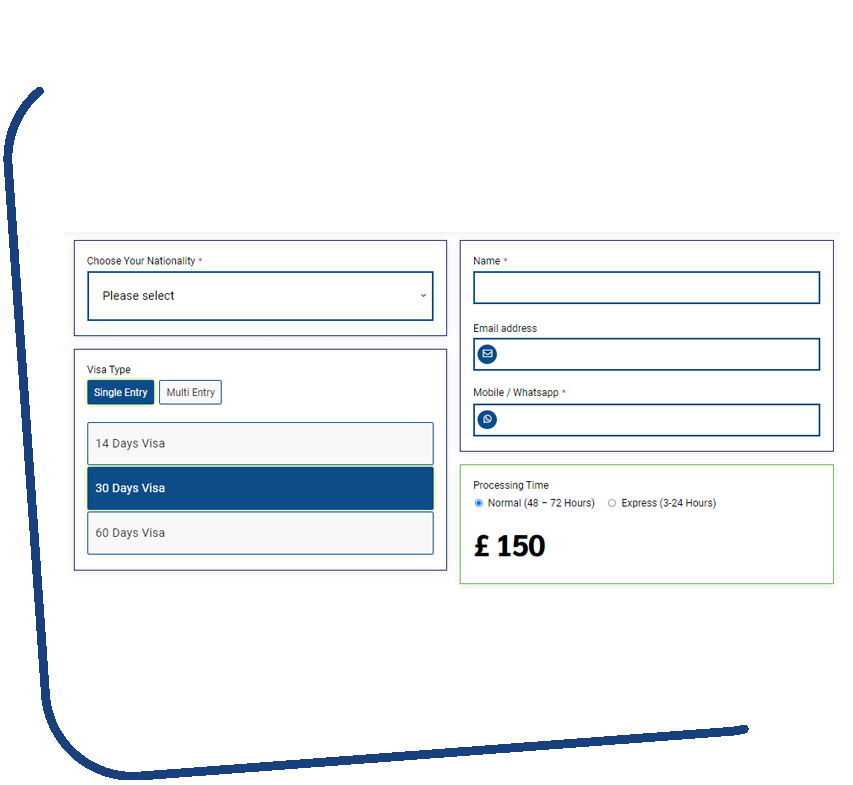
Step 1
Apply Dubai Visa Online
Simple application form:
1. Choose your nationality (Your country)
2. Choose type of Dubai visa (Single or multi entry visa)
3. Choose Visa option according to stay duration
4. Fill the contact details
5. Choose processing time
1. Choose your nationality (Your country)
2. Choose type of Dubai visa (Single or multi entry visa)
3. Choose Visa option according to stay duration
4. Fill the contact details
5. Choose processing time
🔵 Still Need Help? 🔵
You can contact Dubai Visa Consultants directly by whatsapp.
10. What happens if my Dubai visa application is rejected?
If a visa application is rejected, you can usually reapply after correcting the issue cited in your rejection notice. Common reasons include incorrect documentation, nationality mismatches, or expired passports. Reapplying promptly ensures minimal disruption to travel plans.

We are a UAE visa facilitation service with extensive experience and technical expertise, aiding global travelers in their online Dubai visa application process. Our team reviews each application carefully before submission to UAE immigration. Approval decisions are made solely by UAE immigration authorities and are outside our control. We pride ourselves on our in-depth knowledge and efficiency, simplifying your journey to Dubai with speed and ease.
Verify our UK company registration, trademark and official contact details before applying for a Dubai visa.